
Cervical Pillow vs Regular Pillow: What Is the Difference?
April 2026 · 6 minute read
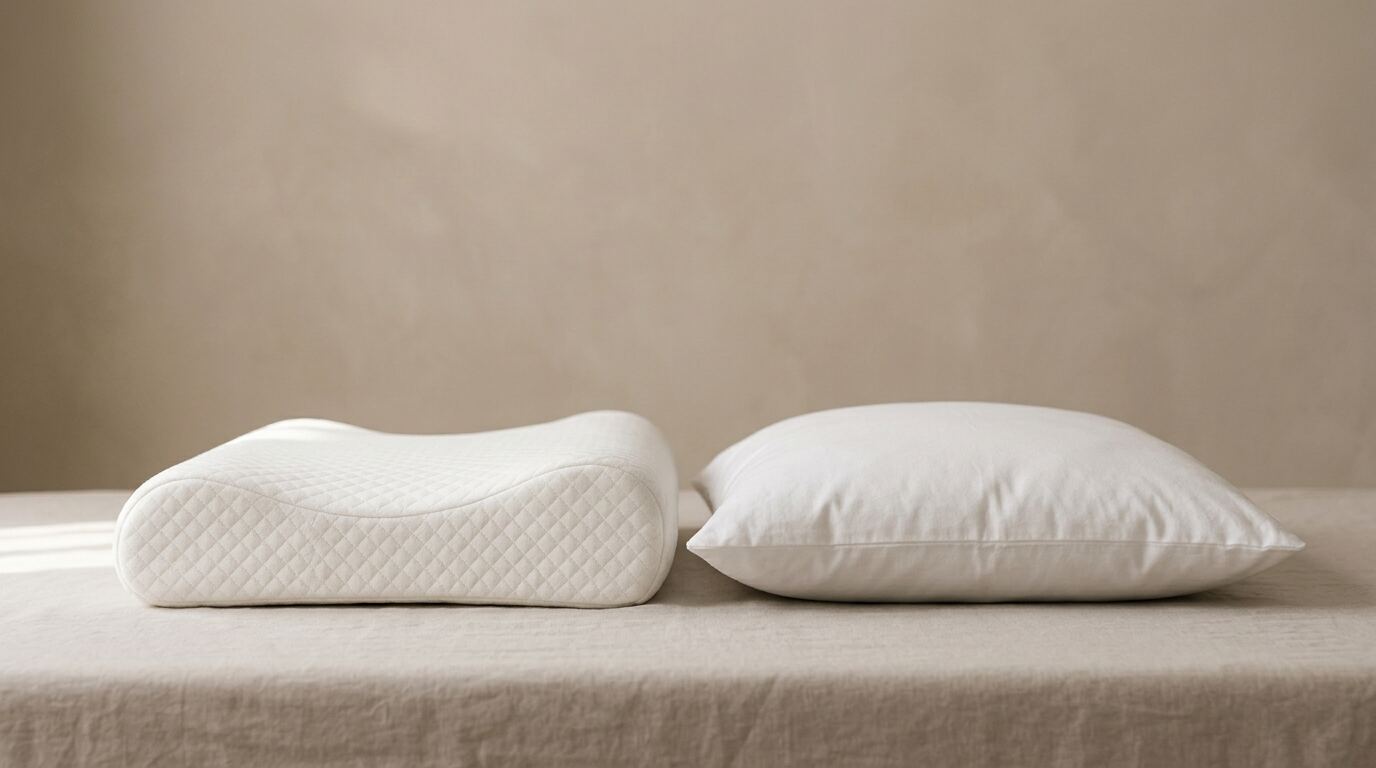
The difference between a cervical pillow and a regular pillow is not comfort, and it is not price. It is which part of you the pillow is actually holding up.
A regular pillow is a rectangle of fill. Your head presses into the middle of it and the fill migrates outward, which leaves the heaviest part of you low and the curve of your neck unsupported. A cervical pillow is shaped so that the neck gets a defined height and the head gets a lower one.
What a cervical pillow actually does
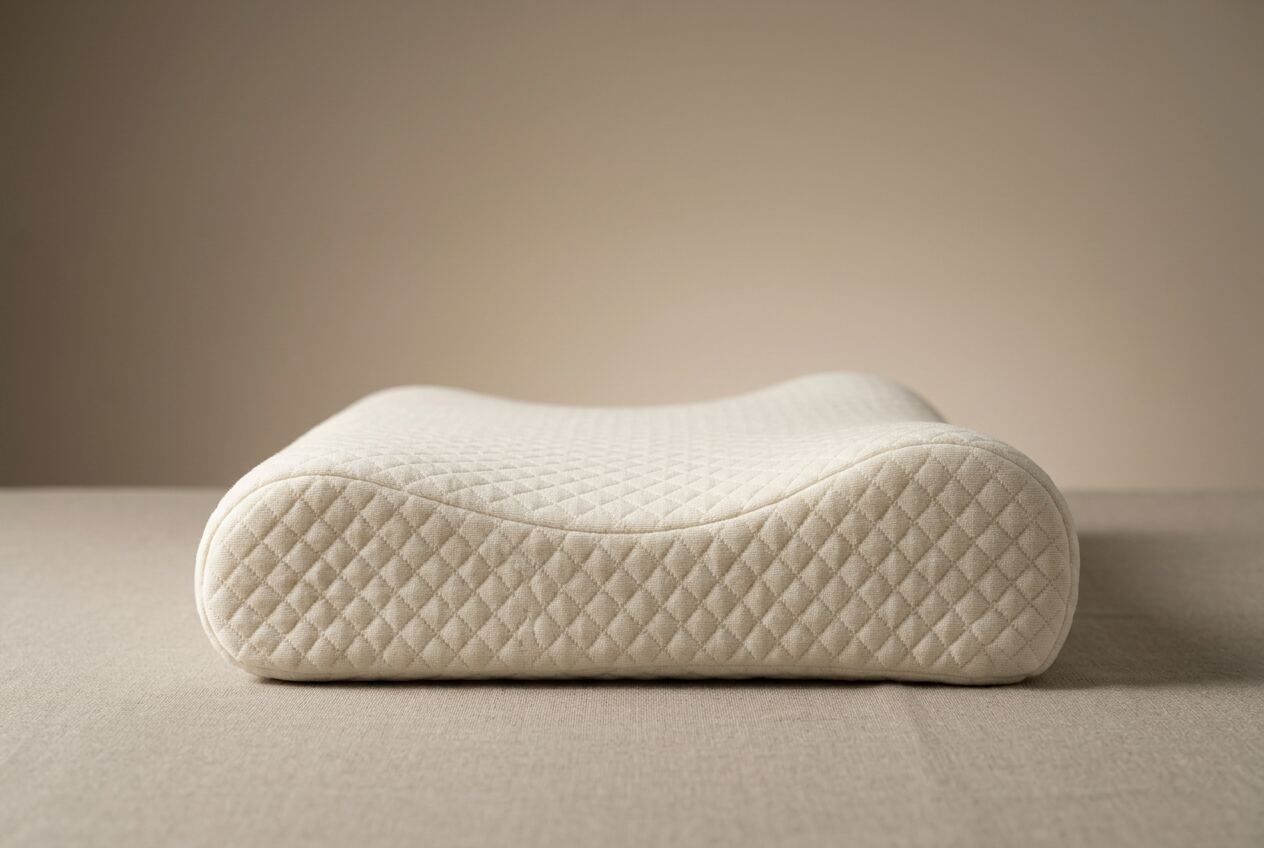
A cervical, or contour, pillow has two zones. The raised ridge sits under the neck and fills the space left by the natural forward curve of the cervical spine. The lowered well sits under the back of the head so the skull is not pushed forward.
The effect is that your head, neck and upper spine stay closer to the alignment they hold when you are standing with reasonable posture, instead of being propped at whatever angle a loose fill happens to settle into.
What a regular pillow does well
This is not a story where one product is simply worse. A regular pillow is soft, cheap, familiar and easy to adjust. You can fold it, stack it, hug it, sleep on your stomach on it. It is a good pillow for people with no complaints.
The trade-off is that its support height changes constantly. Every fill pillow compresses, and cotton and polyester fills compress permanently over months, which is why a pillow that felt fine in January feels flat by June.
Side-by-side, in plain terms
What changes when you move from one to the other:
- Support: defined neck ridge versus whatever height the fill settles at.
- Consistency: memory foam returns to shape nightly; loose fill gradually does not.
- Adjustability: a regular pillow can be folded and reshaped; a contour cannot.
- Adjustment period: a contour usually takes a few nights to feel normal.
- Positions: contour suits back and side sleeping; stomach sleeping suits neither well.
Who should not switch
If you sleep on your front, a contour pillow will fight you, because the ridge sits under your cheek rather than your neck. If you like changing pillow shape through the night, a fixed profile will feel restrictive for the first week.
And if you have ongoing pain, numbness or tingling, a pillow is a support decision, not a treatment. Get it looked at properly.
If you decide a contour is right
Choose by measurement rather than adjective: check the published loft for your size, the foam density, and whether the brand states which sleeping positions the shape is designed for. Our own cervical memory foam pillow publishes all three, and lists loft per size so a broader-shouldered side sleeper is not buying the same height as a smaller back sleeper.
Nidra makes one product: a cervical contour pillow with published loft, foam density and cover specifications, in three sizes.